Leave Your Message

What Are the Best China Tri Proof Lights for Global Buyers?

For global buyers, choosing the best Tri-Proof Lights is rarely a simple comparison of wattage and price. A warehouse in Rotterdam, a food-processing room in Singapore, and a parking garage in Toronto face different temperatures, moisture levels, and installation habits. The right fitting must survive real conditions, not only look impressive on a product sheet.

Lighting researcher Dr. Nadarajah Narendran has often emphasized, “Lighting quality is not just about lumens; it is about how people experience the space.” That principle matters here. Buyers should examine IP65 or IP66 protection, impact resistance, operating temperature, lumen maintenance, flicker performance, and color consistency. Check the driver, too. A strong housing cannot compensate for an unreliable power supply.

Small details matter.

A 120-centimeter fixture may simplify warehouse replacement, while a 150-centimeter model can reduce dark gaps between fittings. In cold storage, starting performance deserves careful testing. In humid locations, cable glands and sealing points may fail before the LED board. These are practical observations from installation work, not merely catalog promises.

There is no universal best option. That is the uncomfortable part. Some suppliers provide excellent test reports but weak after-sales support. Others offer low prices, yet their claimed lifespan remains difficult to verify. Global buyers should request samples, photometric files, warranty terms, certification evidence, and batch-testing records before committing. Even then, mistakes happen. A pilot installation may reveal glare, uneven spacing, or unexpected heat. The best Tri-Proof Lights are therefore selected through evidence, site experience, and honest review—not attractive specifications alone.
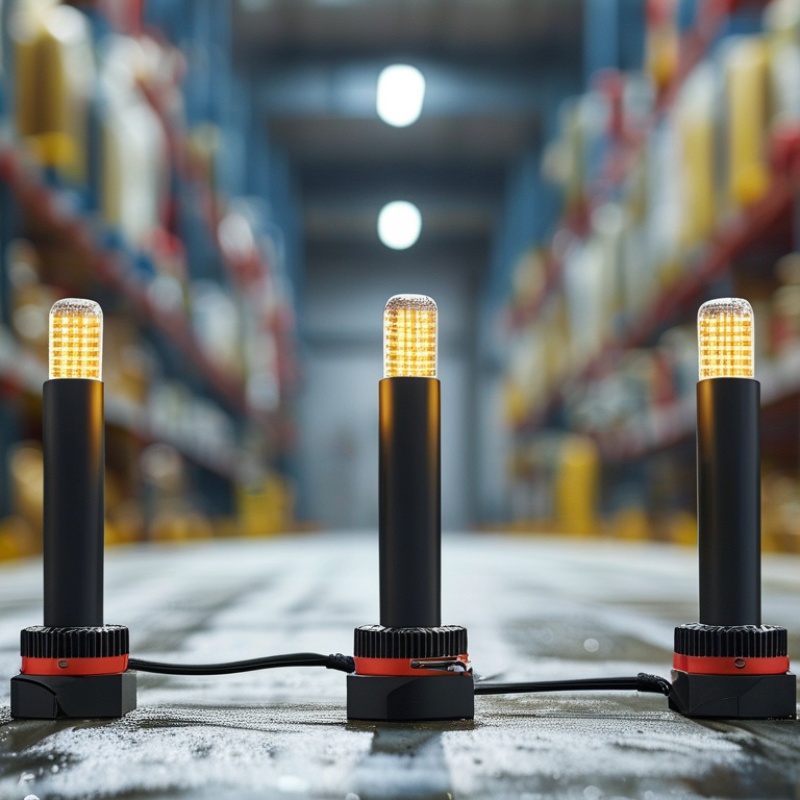
What Are the Best China Tri Proof Lights for Global Buyers?

What Are China Tri-Proof Lights and How Do They Work?

China tri-proof lights are sealed LED fixtures designed to resist dust, moisture, and corrosion. The term usually refers to protection against harsh indoor or outdoor conditions. However, specifications vary between manufacturers, so “tri-proof” is not a complete performance guarantee.

Inside the housing, LED chips convert electrical current into light through a driver. The driver regulates voltage and helps maintain stable brightness. A polycarbonate cover spreads light across warehouses, parking areas, workshops, and tunnels. Silicone gaskets seal the cover and cable entries.

Aluminum or reinforced plastic bodies help manage heat, although plastic models may dissipate heat less effectively. Proper thermal design directly affects service life.

Global buyers should check IP ratings, impact ratings, input voltage, color temperature, and driver quality. IP65 may resist dust and water jets, while IP66 offers stronger water protection. Installation still matters. Poorly tightened cable glands can let moisture enter. No fixture is maintenance-free. In real projects, condensation can appear when temperature changes quickly, even inside sealed housings. Buyers should request photometric data, safety test reports, and samples before placing large orders. A sample test under local voltage and mounting conditions often reveals glare, uneven brightness, or heat problems that product photos cannot show.
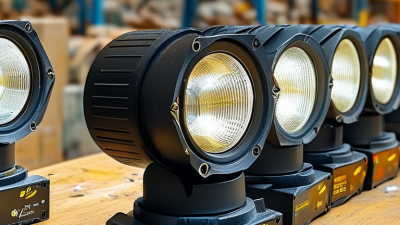
Which China Tri-Proof Light Types Suit Different Applications?

Choosing the right China tri-proof light depends on the application, not only on price or wattage. The International Energy Agency estimates that lighting uses about 15% of global electricity. Therefore, efficacy matters in warehouses, workshops, and parking areas. The U.S. Department of Energy’s Solid-State Lighting R&D Opportunities report shows that advanced LED packages can exceed 200 lumens per watt in laboratory conditions, although commercial fixtures vary widely. Buyers should check delivered lumens, power factor, flicker, and tested lifetime.

For dusty workshops or covered parking, IP65 linear tri-proof lights usually provide practical protection against dust and water jets. IP66 models suit harsher washdown zones. Food-processing areas need smooth housings and easy cleaning, while cold storage requires drivers tested below freezing. Cold rooms differ. A vapor-tight housing and stable startup performance are more important than decorative optics. For warehouses with tall racks, wider beams may waste light. Narrower optics can place more illumination on aisles, but the layout must be verified with a lighting calculation.

Motion-sensor tri-proof fixtures fit corridors, stairwells, and intermittently occupied storage rooms. Emergency versions support evacuation lighting, but their battery duration and temperature range need independent verification. IEC 60598 and IEC 60529 references help, yet certificates alone do not prove field performance. Ask for LM-79 photometric data, LM-80 or TM-21 LED evidence, and sample testing. A perfect specification is rare. I still see buyers selecting IP ratings while ignoring glare, wiring access, and replacement costs. That mistake becomes visible after installation.

How to Compare China Tri-Proof Light Performance and Quality?

What Are the Best China Tri-Proof Lights for Global Buyers?

Comparing China tri-proof lights requires measured performance, not impressive catalog claims. Check delivered lumens, wattage, efficacy, beam angle, and color consistency. The U.S. Department of Energy’s CALiPER evaluations showed that real LED performance can differ from claimed specifications. Ask for LM-79 test reports from an accredited laboratory. A practical target is above 120 lumens per watt for efficient commercial models, although temperature and diffuser design can reduce output.

Look beyond brightness. Use LM-80 and TM-21 data to assess LED lumen maintenance over time. L70 projections should match the stated operating temperature. Check color rendering, usually CRI 80 or higher, and request flicker measurements at different dimming levels. The IEEE 1789 guidance is useful when evaluating potential flicker risks. Small details matter.

Wet locations demand verified protection. IEC 60529 testing should support the stated IP rating, such as IP65 or IP66. Review gasket materials, cable glands, impact resistance, and corrosion treatment. IEC 60598-1 also helps assess general luminaire safety. Ask for a complete test sample, not only a PDF. In my experience, the weakest point is often the connector, not the LED board. That deserves closer inspection. Warranty terms, batch consistency, replacement parts, and factory quality records should also be compared. Some suppliers provide excellent samples but inconsistent production. That is an uncomfortable possibility, yet buyers should test multiple units before approving a large order.

What Are the Best China Tri Proof Lights for Global Buyers? - How to Compare China Tri-Proof Light Performance and Quality?
Comparison Dimension Entry-Level Tri-Proof Light Commercial-Grade Tri-Proof Light High-Performance Tri-Proof Light What Global Buyers Should Verify
Typical luminous efficacy 90–120 lm/W 120–160 lm/W 150–190 lm/W Check whether the figure is for the complete luminaire or only the LED package. Request an LM-79 or equivalent photometric report.
Typical power range 20–60 W 30–80 W 40–100 W Compare wattage with delivered lumens, not wattage alone. Confirm input power at the rated voltage.
Ingress protection IP65–IP66 IP66 IP66–IP67 IP65 protects against dust and water jets; IP66 provides stronger water-jet protection; IP67 includes temporary immersion protection. Confirm the test standard and product configuration.
Impact protection IK07–IK08 IK08 IK09–IK10 IK ratings indicate resistance to mechanical impact. Verify the rating for the complete assembled fixture, including the diffuser and end caps.
Color rendering CRI ≥80 CRI ≥80; CRI ≥90 optional CRI ≥80; CRI ≥90 commonly available Use CRI ≥80 for general industrial areas. Choose CRI ≥90 where accurate color recognition is important. Request test data rather than relying on marketing language.
Color temperature options 4,000 K or 6,500 K 3,000 K, 4,000 K, 5,000 K, or 6,500 K 2,700–6,500 K, with tighter color consistency Confirm the actual CCT tolerance and whether the product uses a standard ANSI color bin or another documented binning system.
Color consistency Often 5-step MacAdam or not declared Typically 3–5 step MacAdam Typically 3-step MacAdam or better Lower MacAdam step values generally indicate better color uniformity. Ask for binning information when multiple fixtures must look identical.
Power factor ≥0.90 at full load ≥0.95 at full load ≥0.95, with high-quality driver options Check power factor at 100% load and across the declared input-voltage range. Large installations may require stricter limits.
Total harmonic distortion ≤20% typical ≤15% typical ≤10–15% typical Confirm whether THD is measured at full load and at the intended mains frequency. Lower THD can reduce power-quality concerns in large projects.
Rated service life L70: 30,000–50,000 hours L70: 50,000–70,000 hours L70: 70,000–100,000 hours Look for L70 or another defined lifetime method, ambient-temperature conditions, driver lifetime, and test reports. Avoid relying only on an unsupported “100,000 hours” claim.
Operating temperature Approximately −20°C to +40°C Approximately −30°C to +45°C Approximately −40°C to +50°C Verify the declared ambient-temperature range, especially for cold storage, hot factories, outdoor canopies, and enclosed installations.
Housing and diffuser Polycarbonate or aluminum-plastic construction; standard diffuser Extruded aluminum body with polycarbonate diffuser or reinforced polycarbonate body Thermally optimized aluminum body with UV-resistant, impact-resistant polycarbonate diffuser Check UV resistance, diffuser yellowing data, gasket material, end-cap construction, and resistance to cleaning chemicals used at the site.
Thermal management Basic internal heat dissipation Improved aluminum heat-spreading structure Engineered thermal path with documented temperature testing Request LED junction-temperature or case-temperature test information. Excessive heat can shorten LED and driver life.
Electrical protection Basic overcurrent and short-circuit protection Overcurrent, overvoltage, and short-circuit protection Enhanced protection with surge protection options For industrial or outdoor projects, confirm surge protection rating, such as 4 kV, 6 kV, or 10 kV, and whether protection is line-to-line, line-to-ground, or both.
Flicker performance May vary by driver design Low-flicker driver options available Low-flicker or flicker-controlled driver options Request measured flicker percentage, flicker index, or PstLM data where visual comfort, cameras, or rotating machinery are concerns.
Dimming and controls Usually non-dimmable 0–10 V, DALI, or motion-sensor options may be available 0–10 V, DALI-2, emergency, sensor, and smart-control options may be available Confirm control compatibility, dimming range, standby power, wiring method, and whether the control gear is factory-installed or supplied separately.
Emergency lighting option Limited availability Emergency battery versions available Emergency versions with selectable duration and self-test options Check emergency output, autonomy time, charging time, battery type, test method, and compliance with the destination market’s emergency-lighting requirements.
Input-voltage compatibility 220–240 V AC or 100–277 V AC, depending on model 100–277 V AC commonly available 100–277 V AC or wider-range versions available Match the driver to the target country’s voltage, frequency, earthing system, and power-grid conditions. Confirm operation at both minimum and maximum voltage.
Installation flexibility Surface mounting; basic clips Surface, suspended, and continuous-row options Surface, suspended, continuous-row, angled, and quick-connect options Evaluate mounting clips, suspension kits, connector reliability, cable entry, service access, and compatibility with existing fixtures.
Compliance documentation Basic declaration or regional documents may be available Commonly supported with safety and EMC documentation Expanded documentation, photometric files, and regional compliance support Request current reports for electrical safety, EMC, photometry, ingress protection, impact protection, and RoHS or equivalent substance restrictions.
Best-fit application Low-cost indoor areas, storage rooms, and low-duty installations Factories, workshops, parking areas, warehouses, and commercial facilities Cold storage, food-processing areas, harsh industrial sites, outdoor covered areas, and long operating-hour projects Select according to environment, operating hours, maintenance access, required illumination, energy targets, and total cost of ownership.
Recommended purchasing approach Prioritize verified basic safety and acceptable lumen output Balance efficiency, durability, controls, and documentation Prioritize test evidence, thermal design, surge protection, service life, and lifecycle cost Use a sample approval process, compare identical test conditions, and include incoming inspection criteria in the purchase specification.
Note: The figures above are representative comparison ranges for common LED tri-proof-light configurations, not specifications for a particular supplier or product. Actual performance depends on LED package, driver, housing design, ambient temperature, installation method, and test conditions. Buyers should verify the final datasheet, photometric report, safety and EMC documentation, IP/IK test reports, and sample performance before placing a production order.

What Certifications Should Global Buyers Verify?

What Are the Best China Tri Proof Lights for Global Buyers?

Certification checks should begin with the destination market, not the product catalogue. The IEA’s Energy Efficiency 2023 report estimates that lighting uses about 15% of global electricity. Therefore, buyers need reliable safety and efficiency evidence, not only attractive wattage claims.

Request the original test reports and verify the exact model, input voltage, LED driver, and factory address. For outdoor or industrial installations, check IEC 60598-1 and the relevant IEC 60598-2 requirements. IP65 or IP66 ratings should reference IEC 60529. IK08 claims should reference IEC 62262. These details matter when dust enters a warehouse or water reaches a loading bay. A CE mark supports European market compliance, but it is not a single safety certificate. Confirm the Declaration of Conformity, EMC evidence, RoHS records, and applicable LVD testing.

For North American projects, verify whether the luminaire was tested to UL 1598 or an accepted equivalent. The CB Scheme report can also support international acceptance, but national differences may still apply. Ask whether the report covers the complete luminaire, rather than only its internal driver. That mistake appears more often than buyers expect. Energy performance data should include lumen output, power consumption, lifetime testing conditions, and thermal results. The U.S. Department of Energy’s solid-state lighting reports repeatedly stress the importance of testing conditions and useful life definitions. A certificate folder can look complete yet remain incomplete. Independent laboratory verification is safer, although it adds time and cost.

What Certifications Should Global Buyers Verify for China Tri-Proof Lights?

Certification requirements depend on the destination market. This verification matrix shows the main documentation areas buyers should check before purchasing. A value of 1 means the item is normally relevant to that certification route; 0 means it is not the route’s primary document.

Buyer guidance: For the EU, request the Declaration of Conformity and supporting evidence for the Low Voltage, EMC and RoHS requirements. For the United Kingdom, verify the applicable UK regulations and UK Declaration of Conformity. For CB or North American purchases, check the certificate scope, product model, electrical ratings and applicable safety standard. For all markets, request an IP test report to confirm the claimed protection level under IEC 60529.

How to Select a Reliable China Tri-Proof Light Manufacturer?

Selecting a reliable China tri-proof light manufacturer requires more than comparing catalogue prices. Examine how the factory controls materials, assembly, testing, and after-sales service. Ask for evidence.

Request datasheets for the LED efficiency, driver brand category, power factor, surge protection, colour temperature, and rated lifetime. Confirm whether IP65, IP66, or IK08 claims come from independent laboratory tests. A bright sample can still fail in a humid warehouse. Check the sealing gasket, cable gland, housing thickness, and terminal design. These small parts often reveal production discipline.

Order samples from the same production line intended for bulk supply. Test them for several weeks in realistic conditions, including frequent switching and high ambient temperatures. Compare light output, flicker, surface temperature, and power consumption against the submitted specifications. Factory audits should review calibration records, incoming inspection, aging tests, and batch traceability. Do not accept a certificate without checking its scope and validity for your destination market.

Communication is another practical test. A dependable manufacturer answers technical questions clearly, explains limitations, and provides a corrective-action process when defects appear. Discuss warranty coverage, spare parts, replacement timing, packaging strength, minimum order quantities, and delivery capacity in writing. Claims may change.

Some buyers focus too heavily on the lowest quotation. That approach can overlook driver failures, inconsistent colour, or weak waterproofing. A stronger supplier may cost more initially, yet reduce maintenance and replacement risks. Still, no factory is perfect. Leave room for independent inspection, sample rejection, and a written improvement plan before scaling production.