10 Essential Tips for Choosing Tri-Proof Lights for Your Space
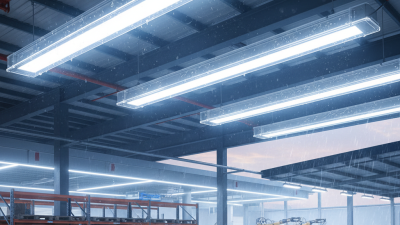
Choosing the right lighting for your space can be challenging. Tri-Proof Lights have become increasingly popular due to their durability and versatility. They are ideal for various settings, including garages, basements, and outdoor areas. These lights withstand harsh conditions such as moisture and dust, making them suitable for tough environments.
When selecting Tri-Proof Lights, consider factors like brightness, energy efficiency, and design. Assessing your space's specific needs will help you make an informed choice. While many options exist, not all Tri-Proof Lights will meet your requirements. It's important to evaluate product specifications carefully to avoid making a poor investment.
Your choice of Tri-Proof Lights should reflect both functionality and aesthetics. Quality options offer long-term reliability, ensuring your environment remains well-lit and safe. Reflecting on your lighting needs can lead to a better decision, enhancing your overall space. Remember, the right light can transform an ordinary area into something extraordinary.
Understanding Tri-Proof Lights: Features and Benefits
When considering tri-proof lights, understanding their features and benefits is crucial. Tri-proof lights are designed to withstand harsh environments. They protect against dust, moisture, and corrosion, making them ideal for various settings. A study by the Lighting Research Center indicates that these lights can reduce maintenance costs by up to 30% due to their durability.
Tri-proof lights typically have an IP rating of IP65 or higher. This means they are fully protected against dust and can withstand low-pressure water jets. In industrial settings, where safety and efficiency are paramount, these lights can enhance visibility and reduce the risk of accidents. Reports suggest that well-lit environments can lower workplace accidents by 24%.
Selecting tri-proof lights means considering their energy efficiency as well. Many models are equipped with LED technology, which can save up to 75% in energy costs compared to traditional lighting. However, consumers should be cautious. Not all tri-proof lights offer the same levels of efficiency. It’s essential to evaluate specifications critically. Understanding the actual performance can prevent purchases that fall short of expectations.
Determining the Right Size and Brightness for Your Space
Choosing the right size and brightness for tri-proof lights can significantly affect the functionality of a space. According to the Lighting Research Center, light levels between 300 to 500 lux are ideal for general spaces like warehouses and garages. For areas requiring more detail, such as workshops, higher levels of 750 lux or more are recommended. Assessing the length and height of your space can provide a clearer understanding of the lighting requirements.
In addition to size, the distribution of light is essential. A report from the Illuminating Engineering Society suggests that even light distribution minimizes shadows and enhances safety. Consider the placement of fixtures. For example, mounting lights higher can help achieve better dispersion but may result in dimmer light if not accounted for appropriately. A rough rule of thumb is to place lights at least ten feet apart for effective coverage. However, individual space layouts can challenge these norms, leading to uneven brightness.
Brightness can also be measured in lumens. Standard tri-proof lights often provide between 1000 to 5000 lumens. However, selecting the appropriate lumen output should take into account both personal preferences and the tasks performed in the area. Too bright can be glaring and harsh, while too dim can make activities difficult. Evaluate how light interacts with colors and materials in your space. The wrong hue can make a space feel cold or uninviting, underscoring the importance of thoughtful consideration in lighting choices.
Assessing Environmental Conditions for Optimal Performance
Selecting the right tri-proof lights for your space requires careful consideration of environmental conditions. These lights are designed to withstand humidity, dust, and extreme temperatures. According to industry reports, up to 35% of lighting failures are linked to poor environmental compatibility. Understanding your specific environment can significantly enhance the performance and longevity of these lights.
Assessing humidity levels is crucial. For areas with high moisture, like bathrooms or kitchens, look for lights with high IP ratings. An IP65 rating or higher will ensure protection against water ingress. Remember, not all tri-proof lights can handle excessive dampness. If your space is particularly humid, adjust your expectations accordingly. Regular testing of light performance in real conditions is advisable.
Consider temperature variations, too. Some tri-proof lights excel in cold climates, while others perform better in heat. Aim for lights rated for direct exposure if your installation site is outdoors. Verify specifications to ensure the technology aligns with your local climate. As a tip, think about integrating smart controls for further flexibility in challenging environments. This additional layer can help adapt to changing conditions. Be proactive, not reactive, in your approach to lighting.
Evaluating Energy Efficiency and Lifespan of Tri-Proof Lights
When choosing tri-proof lights, evaluating energy efficiency and lifespan is crucial. Energy-efficient lights can reduce utility bills significantly. According to the U.S. Department of Energy, LED lights use up to 75% less energy than traditional lighting. This means lower costs and a smaller carbon footprint.
Lifespan is another critical factor. Most tri-proof LED lights offer a lifespan of 30,000 to 50,000 hours. This is much longer than fluorescent options, which typically last about 10,000 hours. Fewer replacements mean less waste. However, not all tri-proof lights are created equal. Some models may underperform, leading to frequent replacements and increased maintenance costs.
Additionally, consider how luminous efficacy can affect your space. This refers to the amount of light produced per watt of electricity. High-efficacy lights offer better performance in dimly lit areas, enhancing visibility. Always check independent test reports for detailed performance metrics. Sometimes, higher initial costs result in greater long-term savings. It's essential to balance upfront investments with overall efficiency and lifespan.
10 Essential Tips for Choosing Tri-Proof Lights for Your Space
| Tip Number |
Tip |
Energy Efficiency |
Lifespan (Hours) |
| 1 |
Consider the IP Rating |
Varies by product |
30,000 - 50,000 |
| 2 |
Evaluate Lumens Output |
Higher lumens = Better efficiency |
40,000 - 70,000 |
| 3 |
Opt for LED Options |
Up to 90% less power consumption |
50,000 - 100,000 |
| 4 |
Check for Dimming Features |
Increases efficiency and lifespan |
Varies by use |
| 5 |
Assess Color Temperature |
Influences mood and efficiency |
50,000 - 100,000 |
| 6 |
Look for Energy Star Ratings |
More reliable efficiency |
Varies by product |
| 7 |
Choose the Right Wattage |
Optimizes energy use |
50,000 - 100,000 |
| 8 |
Consider the Design and Placement |
Affects light distribution |
Varies by product |
| 9 |
Review Warranty Options |
Indicates product reliability |
Varies by brand |
| 10 |
Consult with Professionals |
Advisory on best practices |
Varies by application |
Selecting the Appropriate Installation and Maintenance Options
When selecting tri-proof lights, installation and maintenance play crucial roles. Proper installation enhances the durability and efficiency of your lighting solutions. First, consider the mounting options. Tri-proof lights can be ceiling-mounted, wall-mounted, or suspended. Choose an option that suits your space and provides optimal illumination. Ensure the installation height allows for even light distribution without creating harsh shadows.
Maintenance is just as important as installation. Regular checks can prevent issues that might arise over time. Inspect the fixtures for dust and debris buildup. This simple task can improve light output significantly. Additionally, consider the environment. In humid or dusty areas, the lights may require more frequent maintenance. Don't overlook the need for replacement parts, as they can ensure longevity and reliability.
Choosing the right installation and maintenance options is about more than just practicality. It's a chance to reflect on how your choices affect the space. Take time to understand the unique requirements of your environment. This way, your tri-proof lights will not only function well but also contribute positively to the overall ambiance.



 Email
Email Whatsapp
 WeChat