10 Tips for Choosing the Best Moisture Proof Lamp for Your Needs?
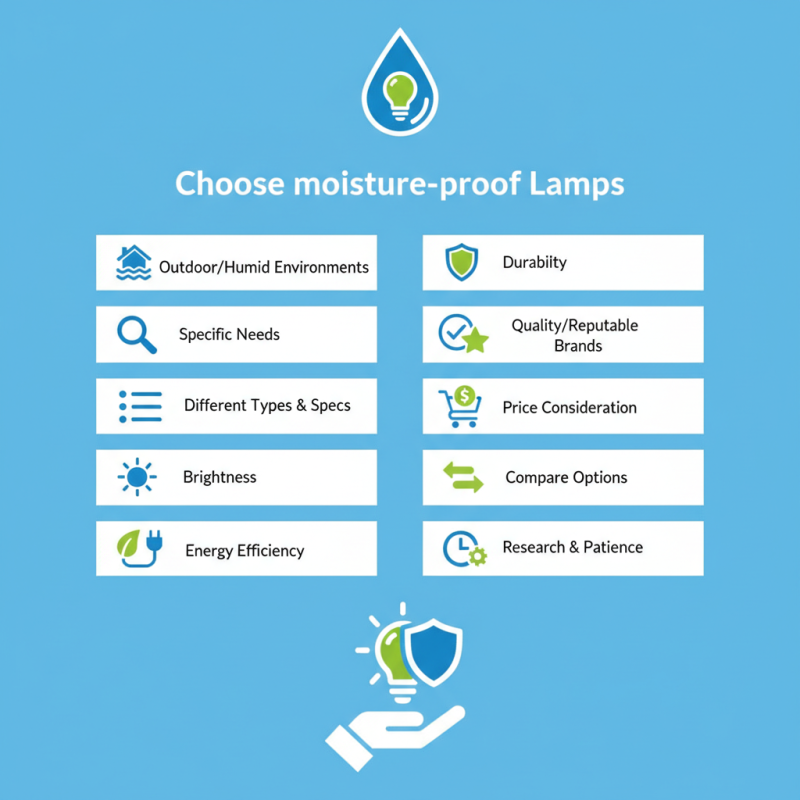
Choosing the right Moisture-Proof Lamp is crucial for various applications. Whether you need it for outdoor settings or humid environments, understanding your specific needs is key. Moisture-Proof Lamps come in different types and specifications, making the selection process daunting.
Consider factors like brightness, energy efficiency, and durability. Quality matters; a poorly designed lamp may not withstand moisture exposure. Look for reputable brands with positive reviews. This ensures you invest in a reliable product.
Price is also a consideration, but don’t compromise on essential features for savings. A cheap lamp may lead to frequent replacements. Take your time to research and compare options. A little patience can result in a better match for your requirements.
Understanding Moisture Proof Ratings: IP65 vs. IP67 Explained
When choosing a moisture-proof lamp, understanding moisture-proof ratings is crucial. The two commonly referenced ratings are IP65 and IP67. These ratings indicate levels of protection against dust and water. IP65 means the lamp is dust-tight and can withstand low-pressure water jets. This rating is suitable for most indoor and outdoor applications, where direct water exposure is minimal.
In contrast, IP67 offers more robust protection. It implies complete dust ingress protection and the ability to withstand immersion in water up to 1 meter for 30 minutes. This feature makes IP67 lamps good for more challenging environments, like outdoor settings or areas with high humidity. However, keep in mind the higher rating does not always mean it's the best choice. Consider your specific needs. Will the lamp be exposed to direct rain, or is it for a damp basement? What about potential temperature fluctuations? These factors can influence your choice significantly.
Evaluating your environment is essential before making a decision. Sometimes, people tend to overestimate the need for high ratings. They might choose an IP67 lamp unnecessarily and spend more money without truly needing that level of protection. Understanding these ratings allows for a more informed selection that genuinely meets your moisture-proof needs.
Key Considerations for Selecting Lamp Materials for Humidity Resistance
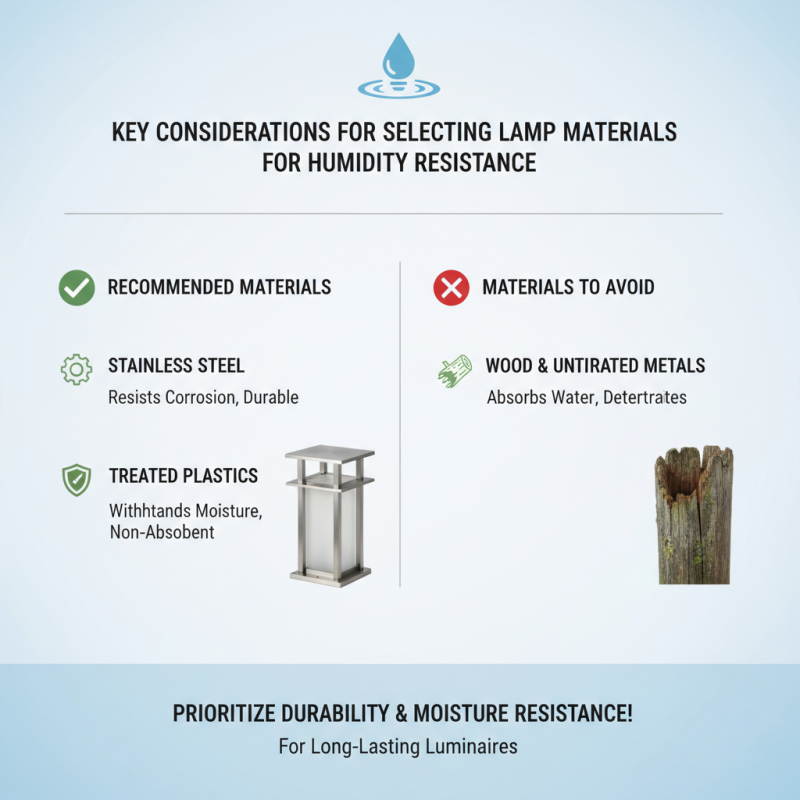
When selecting lamp materials for humidity resistance, it's essential to prioritize durability. Consider materials like stainless steel or treated plastics. These options resist corrosion and can withstand high moisture levels. Traditional materials, such as wood, may absorb water and deteriorate over time. Think about how each material interacts with humidity.
Look for features like seals and protective coatings. A well-designed lamp should prevent moisture from intruding. IP ratings can indicate a lamp’s level of protection against water. Research these ratings before making a purchase. It’s crucial to ensure adequate ventilation for any electronic components to avoid moisture buildup.
Evaluate how the lamp will be used in humid environments. Outdoor lamps may need different specifications than indoor ones. For example, choose brighter, more waterproof options for outdoor settings. Reflect on previous experiences with various materials. Sometimes, even the best-seeming options fail under certain conditions. This highlights the importance of thorough testing and research in your selection process.
Evaluating Light Output: Lumens and Wattage for Moisture Proof Lamps
When selecting moisture-proof lamps, evaluating light output is crucial. Understanding lumens and wattage can significantly impact your choice. Lumens measure brightness, while wattage indicates energy consumption. A lamp with higher lumens provides more light. For areas like bathrooms or basements, you often need brighter light. Aim for at least 800 lumens for adequate visibility in these spaces.
Consider your specific needs. If you often work in the area, a brighter lamp may be beneficial. However, too much light can cause glare, making the space uncomfortable. Balancing lumens with your activities is essential. For casual areas, lower lumens might suffice, reducing energy costs.
One common mistake is equating wattage with brightness. This can lead to poor decisions. A 10-watt LED lamp may produce more light than a traditional 60-watt bulb. Understanding this relationship can refine your selection process. Pay attention to both features for optimal results. Choosing wisely can enhance comfort and utility in moisture-prone environments.
10 Tips for Choosing the Best Moisture Proof Lamp for Your Needs
| Type of Lamp |
Lumens Output |
Wattage |
Best Use Cases |
| LED Moisture Proof Lamp |
1600 lm |
16 W |
Bathrooms, Kitchens |
| Fluorescent Moisture Proof Lamp |
800 lm |
20 W |
Garages, Basements |
| Incandescent Moisture Proof Lamp |
700 lm |
60 W |
Pathways, Outdoor Areas |
| Halogen Moisture Proof Lamp |
1500 lm |
75 W |
Porches, Decks |
| CFL Moisture Proof Lamp |
1000 lm |
15 W |
Utility Rooms, Storage |
The Importance of Energy Efficiency: Choosing Compliant Fixtures
Choosing the right moisture-proof lamp involves considering energy efficiency. According to the U.S. Department of Energy, lighting accounts for about 15% of an average home's electricity use. Energy-efficient fixtures can significantly reduce this cost. Look for products that meet ENERGY STAR standards. These options ensure better efficiency without compromising brightness.
One vital tip is to check the lumen output. This measures light quantity, not watts. A higher lumen rating indicates a brighter fixture. Also, consider the CRI (Color Rendering Index) for optimal light quality. A CRI above 80 is generally recommended for accurate color representation.
Furthermore, look beyond initial costs. Energy-efficient lamps save money over time. According to a report from the International Energy Agency, investing in energy-efficient lighting can lead to savings of up to 70% on lighting bills. So, it’s wise to evaluate total costs instead of just upfront prices.
Energy Efficiency of Moisture Proof Lamps
Installation Tips for Optimal Performance in Moisture-Prone Environments
Installing a moisture-proof lamp correctly is essential for ensuring its longevity and optimal performance. Start by selecting the right location. Choose areas that are highly prone to moisture, such as basements, bathrooms, or outdoor spaces. The installation height also matters. Placing lamps higher can reduce exposure to water and avoid potential damage.
Ensure that you use appropriate seals during the installation. Gaskets and O-rings provide an additional layer of protection against moisture. Pay attention to wiring too. Using moisture-resistant cables will reduce the risk of short circuits. Check that all connections are tight and secure. Loose wires can lead to electrical hazards, especially in damp environments.
Finally, consider regular maintenance checks. Inspect the lamp for any signs of wear and tear. Moisture can compromise materials over time. Replacing parts before they fail can extend the lamp's life. In moisture-prone settings, proactive measures help avoid serious issues later. Lighting solutions should serve their purpose without becoming a source of frustration.



 Email
Email Whatsapp
 WeChat