Leave Your Message

Why Choose Ceiling LED Lights for Global Sourcing?

Global sourcing has changed how buyers evaluate Ceiling Led Lights. Price still matters, but it cannot stand alone. A low-cost fixture may hide weak drivers, uneven diffusion, or poor thermal management. These flaws often appear after installation, when replacement costs become uncomfortable.

Randall Whitehead, a respected lighting designer and educator, said, “Lighting is the jewelry of architecture.” His words fit ceiling applications well. The right fixture shapes a room’s comfort, appearance, and daily performance. Buyers should compare lumen output, color temperature, glare control, flicker performance, driver quality, and expected lifespan. They should also request photometric reports, product samples, and clear warranty terms. Small details matter.

Reliable sourcing requires more than attractive catalog images. Experienced suppliers can explain LED chip brands, housing materials, heat dissipation, dimming compatibility, and production controls. They should also provide consistent specifications across samples and bulk orders. Certification requirements vary between markets, so buyers must verify applicable safety and electromagnetic standards before purchase. Packaging quality deserves attention too. Crushed cartons can damage lenses, connectors, and painted surfaces during long-distance transport.

Ceiling Led Lights may reduce energy use and maintenance demands, but results depend on correct selection. That assumption can fail. A fixture with impressive brightness may create harsh glare in a hotel corridor or office. A warm white model may feel inviting in a restaurant, yet unsuitable for detailed retail work. Global sourcing rewards careful questions, practical testing, and honest supplier communication. Not every specification tells the whole story. Buyers should remain curious, cautious, and willing to revise their choices.
Why Choose Ceiling LED Lights for Global Sourcing?

Ceiling LED Lights: Core Designs, Components, and Global Applications

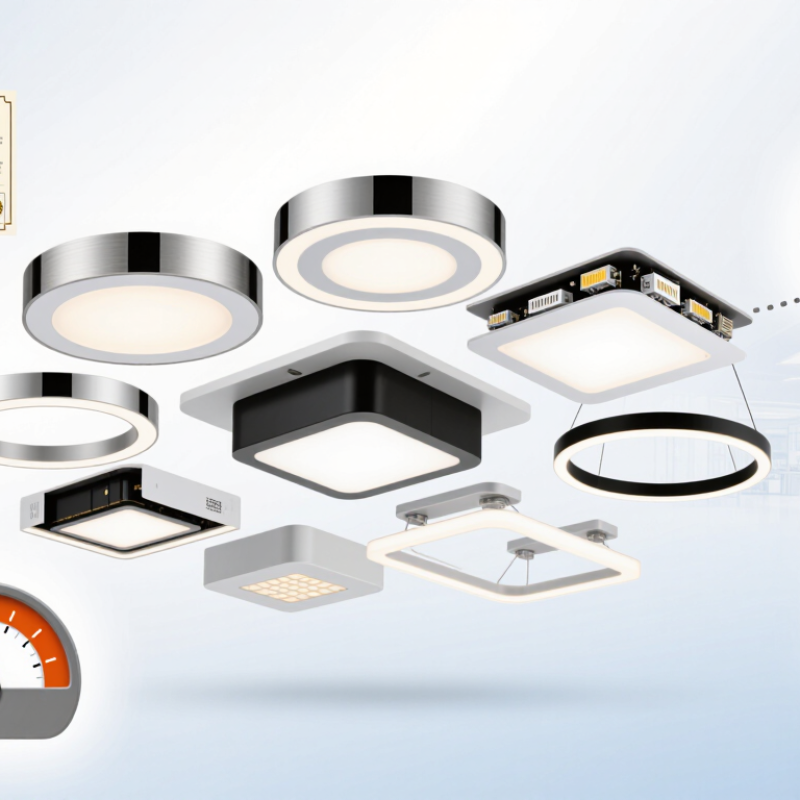
Ceiling LED lights support global sourcing because their designs can match many ceiling structures and lighting needs. Recessed models create a clean, low-profile appearance. Surface-mounted fixtures suit shallow ceilings and renovation projects. Panels provide broad, even illumination in offices and classrooms. Track-style designs offer adjustable lighting for retail spaces and galleries. No single design fits every application.

Key components determine long-term performance. An LED module controls light output, color temperature, and energy use. The driver regulates current and strongly affects flicker, efficiency, and service life. Aluminum housings help transfer heat away from the LEDs. Diffusers shape brightness and reduce glare, while seals improve protection in humid environments. During supplier evaluation, I check thermal test data, driver specifications, photometric files, and sample consistency. Small details matter.

Global applications require practical adaptation. Homes often need warm light and compact fixtures. Offices usually require comfortable brightness with controlled glare. Warehouses may need higher output, stronger housings, and occupancy sensors. Hotels and coastal buildings can require better moisture resistance. Local voltage, ceiling dimensions, installation methods, and maintenance access must be confirmed early. Certifications and test reports should match the destination market, not merely the factory’s domestic requirements. A low quotation may appear efficient, but it can conceal weaker drivers or incomplete documentation. I have learned that samples deserve extended testing, although even careful testing cannot predict every installation condition.
Energy Efficiency: LEDs Use at Least 75% Less Energy Than Incandescent Lamps

For global sourcing, ceiling LED lights offer a practical way to reduce energy consumption. LEDs use at least 75% less energy than incandescent lamps, based on widely cited energy-efficiency guidance. A 100-watt incandescent lamp may be replaced by an LED using about 25 watts, depending on required brightness. This difference becomes significant in offices, warehouses, hotels, and homes with long operating hours. Lower consumption can also reduce monthly electricity costs and electrical load.

The saving is not automatic. Good sourcing requires more than comparing wattage labels. Buyers should review lumen output, efficacy, color temperature, color rendering, driver quality, and rated lifetime. Request photometric data, safety test reports, warranty terms, and samples before placing large orders. Check voltage compatibility for each destination market. Heat management matters too. A poorly ventilated ceiling fixture may lose performance faster than expected.

Still, a lower wattage label can mislead. Actual savings depend on usage hours, installation quality, controls, and electricity prices. There is room for error. I would also examine packaging, spare-part availability, and supplier testing procedures, because failures create replacement costs and unnecessary waste. A careful comparison should measure total ownership cost, not only the initial purchase price. Even accurate specifications cannot predict every site condition. Doorways, high ceilings, dust, and frequent switching may affect real-world performance.

Service Life: LEDs Can Last Up to 25 Times Longer Than Incandescent Lamps

For global sourcing, ceiling LED lights offer more than a lower electricity bill. Their service life can reach up to 25 times that of incandescent lamps. A typical incandescent bulb may fail after about 1,000 hours. Many quality LED products are rated for 25,000 hours or more. That difference matters in warehouses, hotels, offices, and high-ceiling retail spaces.

Fewer replacements can reduce labor, ladder use, packaging waste, and shipping frequency. I have seen maintenance teams replace lamps in busy corridors during operating hours. The work was noisy, disruptive, and more expensive than expected. LEDs can reduce these interruptions, but their lifespan depends on heat control, driver quality, voltage stability, and daily operating conditions. A hot ceiling cavity may shorten performance. Moisture can create another problem.

Buyers should examine test reports, lumen-maintenance data, rated life, and warranty terms before placing large orders. A longer rated life does not always mean equal brightness until the final hour. Light output gradually declines, and poor thermal design can accelerate that decline. Asking for samples helps reveal flicker, color consistency, installation fit, and heat around the housing. It is also wise to compare total ownership cost, not only the unit price. Sometimes the cheapest fixture becomes expensive after repeated failures. Real projects are rarely perfect, so supplier claims should be checked against independent testing and documented operating conditions.

Global Sourcing: Compare Safety Certifications, Voltage, and Lighting Standards

Why Choose Ceiling LED Lights for Global Sourcing?

Global sourcing starts with the destination market, not the product page. A ceiling light approved for one region may not meet another region’s safety requirements. Check the applicable luminaire standard, such as IEC 60598, and confirm whether local rules require additional testing or certification. Ask suppliers for current test reports, model numbers, and certificate scope. A certificate for a similar fixture is not enough.

Voltage needs equal care. Buildings may use different nominal supplies, frequencies, plugs, and wiring practices. Verify the fixture’s input range on its label and technical sheet; do not assume “wide voltage” suits every installation. Confirm dimmer compatibility, driver specifications, and the required ingress protection for damp areas. Small details matter. A mismatch can cause flicker, premature failure, or costly site rework. It is easy to overlook.

Energy performance also deserves evidence. The U.S. Department of Energy’s LED Basics guidance reports that LEDs use at least 75% less energy and can last up to 25 times longer than incandescent lighting. Those comparisons are useful, but they do not guarantee a ceiling fixture’s real-world performance. Request measured efficacy, lifetime assumptions, and test conditions. I would also check whether the supplier’s documentation matches the exact model being quoted. Procurement teams sometimes rush this step. That is worth reconsidering.

Procurement Planning: Assess Total Cost, Supplier Quality, and Logistics

Why Choose Ceiling LED Lights for Global Sourcing?

Procurement Planning: Assess Total Cost, Supplier Quality, and Logistics

Ceiling LED lights deserve evaluation beyond their unit price. The International Energy Agency reports that lighting uses about 15% of global electricity. The U.S. Department of Energy also notes that LEDs can use at least 75% less energy than incandescent lighting and last much longer. These figures support lower operating costs, but only when the driver, heat management, and installation quality remain reliable.

Price is not cost. A procurement model should include energy consumption, replacement labor, warranty claims, import duties, packaging, and freight. Request lumen output, wattage, beam angle, color consistency, and power-factor data. Ask suppliers for IEC 60598 test evidence, production inspection records, and sample aging results. A low quote can hide unstable drivers or poor thermal design. That mistake is easy to make.

Logistics needs equal attention. The World Bank’s 2023 Logistics Performance Index compares 139 economies across customs, infrastructure, tracking, and delivery timeliness. Use those factors when selecting shipping routes and supplier locations. Confirm carton dimensions, stacking limits, lead times, spare units, and delivery buffers. A ceiling fixture may pass laboratory tests but arrive with cracked diffusers after a long sea journey. I still see procurement plans that calculate freight only by product weight. That is incomplete. Total landed cost should reflect volume, damage risk, inspection delays, and the cost of installing replacements.