Leave Your Message

2026 Best Moisture Proof Lamp for Global Buyers

A Moisture-Proof Lamp must do more than survive a splash. In warehouses, washdown areas, and covered outdoor walkways, water can creep past tired seals, while condensation clouds a lens. The International Energy Agency has reported that lighting uses about 15% of global electricity and contributes roughly 5% of energy-related CO₂ emissions. Those figures make efficiency important, but they do not excuse weak protection or poor service life.

“Light is a drug,” lighting researcher Dr. Mariana Figueiro has said, underscoring that lighting choices affect people as well as buildings. For buyers, the practical checks are less poetic: verify the IP rating against IEC 60529, review operating-temperature limits, and ask for test documentation. An IP rating describes protection against dust and water ingress; it does not certify resistance to cleaning chemicals, corrosion, or every form of steam exposure. Details matter.

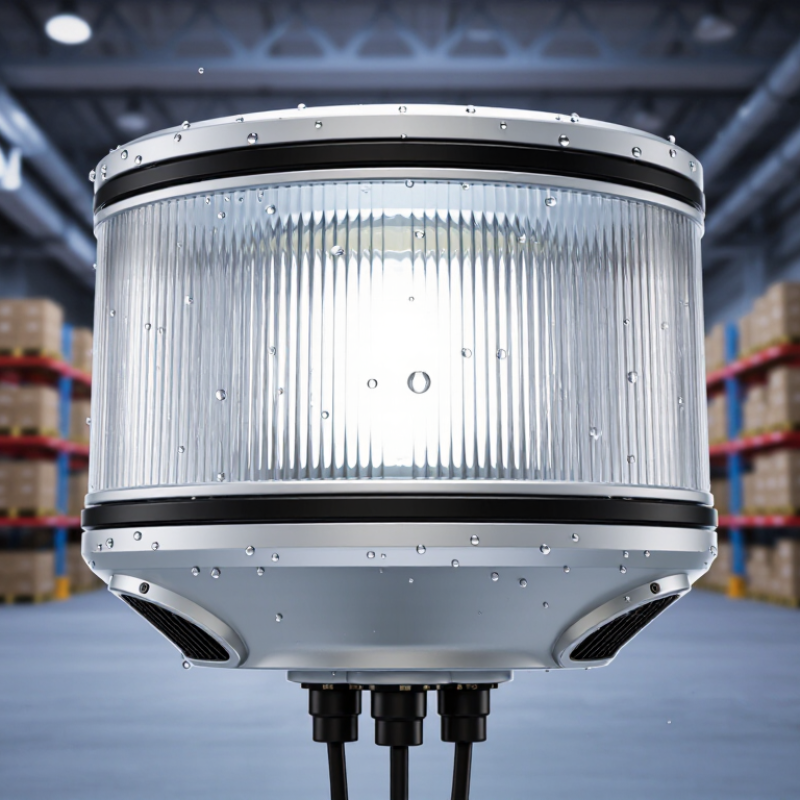
This 2026 guide compares fixture construction, LED performance, installation needs, and supplier evidence for global buyers. Look closely at the gasket, cable entry, housing material, and driver—not only the product photo. A bright lens can still hide a weak seal. And a high IP claim alone may not answer every site-specific question. That is easy to overlook. Reliable purchasing means matching the lamp to the actual environment, then checking the paperwork before ordering at scale.
2026 Best Moisture Proof Lamp for Global Buyers

What Defines a Moisture-Proof Lamp for Global Buyers in 2026?

For global buyers in 2026, a moisture-proof lamp needs more than a sealed-looking housing. Its protection should be verified for the exact product and installation conditions. IEC 60529 defines IP ratings: IP65 means dust-tight protection and resistance to water jets, while IP67 includes temporary immersion testing. These tests are different; an IP67 rating alone does not confirm resistance to every jet or washdown condition. Check the rating, not the label.

The U.S. Department of Energy’s LED Lighting Facts guidance reports that LEDs use at least 75% less energy and can last up to 25 times longer than incandescent lighting. Those figures describe LED technology, not a moisture-proof lamp’s service life. Heat, switching frequency, seals, and installation can change real-world performance. A high IP number is not a complete answer.

For a humid warehouse, inspect the gasket, cable entry, terminal enclosure, and mounting points. For coastal sites, ask about corrosion-resistant materials and suitable fasteners; salt air can reach exposed joints. Request test documentation for the complete assembled lamp, not just an individual component. Confirm the operating temperature range and whether the product suits condensation, spray, or direct washdown. Ratings are useful, but buyers can overread them when the installation details are vague.
How IEC 60529 IP Ratings Distinguish IP65, IP66, and IP67 Protection

For a moisture-proof lamp, the IP code describes tested enclosure protection, not overall product quality. Under IEC 60529, the first digit rates protection against solid objects and dust; the second rates water ingress. IP65 uses “6” for dust-tight protection and “5” for water jets from a nozzle. It suits many exposed areas, but installation details still matter.

IP66 keeps the dust-tight rating and raises water protection to powerful jets. This can be useful where cleaning or wind-driven spray is expected. IP67 also has a “6” for dust, while “7” indicates temporary immersion testing, commonly specified at up to one metre for 30 minutes. Not interchangeable. An IP67 rating alone does not necessarily confirm resistance to strong water jets; look for a combined rating, such as IP66/IP67, when both conditions matter.

Check the test sheet. A rating applies to the tested enclosure under defined conditions, not every cable entry or damaged seal in service. Ask whether the complete lamp, including glands and connectors, was tested in its supplied configuration. A loose connector can undo a good rating. I have seen buyers focus on the number and overlook mounting position, spray direction, or maintenance access. That detail is easy to miss. For global projects, compare the declared test conditions with the actual exposure at the site, and confirm any limits in the manufacturer’s installation instructions.

2026 Best Moisture Proof Lamp for Global Buyers - How IEC 60529 IP Ratings Distinguish IP65, IP66, and IP67 Protection
Buyer comparison point IP65 IP66 IP67
Meaning of first digit 6 — Dust-tight
Dust ingress is prevented under the applicable IEC 60529 test conditions.
6 — Dust-tight
Dust ingress is prevented under the applicable IEC 60529 test conditions.
6 — Dust-tight
Dust ingress is prevented under the applicable IEC 60529 test conditions.
Meaning of second digit 5 — Water jets 6 — Powerful water jets 7 — Temporary immersion
Water exposure indicated Protection against water projected from a nozzle onto the enclosure under the specified test conditions. Protection against more powerful water jets than those used for IPX5, under the specified test conditions. Protection against temporary immersion in water under the specified test conditions.
Typical lamp applications to consider Covered outdoor areas, dusty workshops, and locations exposed to rain or routine hose-down cleaning. Outdoor or industrial locations where stronger water jets may be used for cleaning. Locations where temporary accidental immersion is a credible risk, subject to the product’s installation limits.
What the rating does not establish It does not certify immersion resistance, resistance to every cleaning method, or suitability for every outdoor environment. It does not certify immersion resistance or guarantee protection against every pressure-washing setup. It does not mean permanent underwater operation, and it does not automatically establish IPX5 or IPX6 water-jet protection.
Useful buyer checks Confirm the complete lamp assembly carries the rating and that cable entries, seals, and mounting orientation match the instructions. Check the stated cleaning method and operating conditions; do not assume any pressure washer is covered by the rating. Check the manufacturer’s immersion depth, duration, installation conditions, and whether water-jet protection is also required.
Important: IEC 60529 classifies enclosure protection under defined test conditions. IP65, IP66, and IP67 are not interchangeable; IPX5/IPX6 water-jet tests and the IPX7 immersion test are different. If a lamp must withstand both water jets and immersion, look for the relevant dual rating and verify it in the product documentation. “Moisture-proof” by itself is not an IEC 60529 rating.

How IK08 and IK10 Ratings Measure Impact Resistance in Wet Locations

For 2026 global sourcing, an IK rating gives buyers a measurable way to compare a lamp’s impact resistance. IEC 62262 defines IK08 as resistance to 5 joules of impact, and IK10 as 20 joules. In practical terms, IK10 is tested against four times the impact energy of IK08. That can matter near loading bays, washdown areas, and low-mounted fixtures exposed to tools or carts. A cracked lens can become a maintenance problem.

But IK does not measure water ingress. IEC 60529 uses the separate IP code to classify protection against dust and water. Buyers should check both ratings, plus gasket design, cable entries, and the specified installation method. Ask for test documentation, not only a product label; confirm the tested configuration matches the supplied fixture. Salt spray, cleaning chemicals, temperature swings, and aging seals can affect real-world performance. A laboratory impact test cannot reproduce every site. That limitation deserves attention. It is easy to overvalue IK10 and overlook service access or mounting strength. Choose an IK level for likely impacts, not simply the highest available number. Pair it with the required IP rating.

Impact Resistance for Moisture-Proof Lighting

IK ratings indicate resistance to mechanical impact. The chart shows the impact energy associated with selected IK levels under IEC 62262.

For wet locations: IK ratings describe impact resistance, not protection against water or dust. Check the luminaire’s IP rating separately to confirm its suitability for the installation environment.

How to Match Lamp Materials, Light Output, and CCT to Installation Conditions

2026 Best Moisture Proof Lamp for Global Buyers

Match the housing to the exposure, not just the product photo. For sheltered washdown areas, an IP65-rated fixture may suit; IEC 60529 defines IPX5 protection against water jets and IPX6 against powerful jets. These ratings do not measure corrosion resistance. Near salt air, compare stainless-steel fasteners, coated aluminum, and sealed cable entries. In humid indoor spaces, a stable polycarbonate lens can resist impact, but check its UV and temperature limits. Small detail. A failed gasket can undo a robust housing.

Choose light output from the task and mounting height. A high lumen figure alone does not guarantee useful light on a bench or walkway. Check photometric files, beam spread, and expected dirt buildup; then allow a maintenance factor rather than oversizing blindly. The U.S. Department of Energy’s 2020 U.S. Lighting Market Characterization reports that LEDs represented about 48% of installed lighting stock in 2020. That shift makes fit and service life important, but it does not make every LED fixture suitable for wet locations. Select CCT by surroundings: 3000K can feel less stark in rest areas, while 4000K often suits work zones. Higher CCT is not automatically clearer. I would still verify samples under the actual ceiling and wall colors; catalog images can mislead.

Which IEC 60598 Safety Checks Help Buyers Compare Global Lamp Options

2026 Best Moisture Proof Lamp for Global Buyers

For a moisture-resistant lamp, request evidence against IEC 60598-1 and the relevant product-specific part. The standard covers luminaire safety, but the correct test scope depends on the lamp’s design and intended use. A report should identify the tested model, configuration, and applicable clauses. A similar-looking model is not necessarily equivalent.

Inspect the report for checks on insulation, electric strength, temperature rise, earthing where applicable, and mechanical security. Ask how cable entries, gaskets, and covers were assessed after assembly. Small details matter. A loose gasket or poorly secured cable gland can compromise protection in a damp room. Confirm that the product’s stated mounting position matches the tested setup.

Check the marked IP rating, but do not assume IEC 60598 alone proves water resistance. Ingress protection testing is generally specified under IEC 60529, and the claimed rating should match the intended exposure, such as splashes or water jets. Also compare rated voltage, frequency, ambient temperature, and installation instructions with the destination market and site conditions.

Paperwork can look reassuring. Review the actual test evidence, and clarify any gaps with the supplier or an independent testing body. One imperfect point: reports may not show every production variation, so confirm how ongoing quality is controlled.