Leave Your Message

10 Tips for Choosing Ceiling LED Lights for Global Buyers

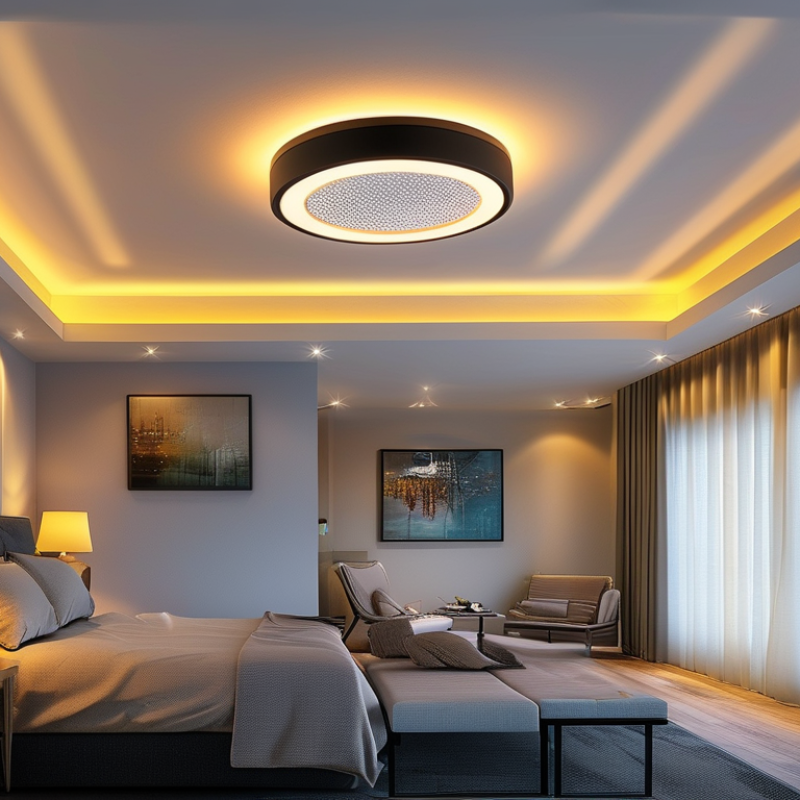
Choosing Ceiling Led Lights is no longer a simple matter of selecting brightness and shape. Global buyers must balance energy performance, visual comfort, safety, installation conditions, and long-term operating costs. The UNEP Global Status Report for Buildings and Construction reports that buildings consume about 30% of global energy and produce approximately 26% of energy-related emissions. Lighting decisions therefore affect more than appearance. They influence maintenance budgets and environmental targets.

LED technology offers measurable advantages. The U.S. Department of Energy states that residential LED products use at least 75% less energy and can last up to 25 times longer than incandescent lighting. However, those figures do not guarantee every fixture will perform equally. A poorly matched beam angle may create dark corners. Excessive blue-white light can feel harsh in a bedroom or hotel corridor. A low-quality driver may also cause flicker, noise, or early failure.

Details matter.

This guide examines ten practical selection points for global buyers, including lumens, efficacy, color temperature, CRI, glare control, dimming, voltage compatibility, IP ratings, certifications, and warranty terms. The International Energy Agency continues to emphasize efficient, quality lighting as part of broader energy-efficiency improvements. Buyers should still question simplified product claims. “High efficiency” can hide weak heat management or uncertain test conditions.

A useful decision begins with the room itself. Measure ceiling height, note local voltage, and identify the installation environment. Then compare verified test data, not only attractive catalog images. Reliable sourcing requires technical documents, traceable certifications, replacement support, and realistic lifecycle calculations.

10 Tips for Choosing Ceiling LED Lights for Global Buyers

Define Light Quality: CRI ≥80, CCT 2700–6500 K, and UGR Targets

Choosing ceiling LED lights starts with measurable light quality, not appearance. CRI should reach at least 80 for general spaces. The CIE 13.3 standard defines the reference method for colour rendering. However, CRI 80 is only a baseline, not a guarantee of natural colour. I once tested two fixtures with similar CRI ratings. One made wood look grey and skin look tired. Check TM-30 data when available, especially Rf and Rg values. The Illuminating Engineering Society recommends TM-30 for a broader colour evaluation.

CCT controls the visual mood and perceived comfort. Choose 2700–3000 K for hospitality or bedrooms, 3500–4000 K for offices, and 5000–6500 K for task-focused areas. These ranges need adjustment for daylight and local preferences. Glare deserves equal attention. For offices, target UGR ≤19; classrooms often use the same limit. Corridors may accept higher values, depending on the design. CIE 117 provides the calculation method, but UGR is not a simple package label. Request the photometric file and review mounting height, spacing, reflectance, and viewing direction. A fixture may claim low glare yet feel harsh above a glossy desk. I would also verify test conditions, because published results can look better than real installations.

10 Tips for Choosing Ceiling LED Lights for Global Buyers — Define Light Quality: CRI ≥80, CCT 2700–6500 K, and UGR Targets
Tip Selection Dimension Recommended Specification or Target Typical Application Why It Matters Buyer Verification Method
1 Color Rendering Index (CRI) CRI ≥80 for general lighting; CRI ≥90 where accurate color appearance is important Homes, corridors, warehouses, retail areas, offices, galleries Higher CRI helps surfaces, products, skin tones, and interior finishes appear more natural under the light. Request a photometric report or test data showing general CRI (Ra). For color-critical spaces, also review R9 performance.
2 Correlated Color Temperature (CCT) 2700–3000 K warm white; 3500–4100 K neutral white; 5000–6500 K cool or daylight white Hospitality and bedrooms; offices and retail; workshops and task areas CCT affects the visual atmosphere and perceived alertness of a space. It does not indicate brightness. Confirm the nominal CCT, tolerance, and whether the product is available in one fixed CCT or as selectable CCT.
3 Unified Glare Rating (UGR) UGR ≤19 for many office and computer-workstation areas; UGR ≤22 may suit general circulation areas Offices, classrooms, meeting rooms, libraries, circulation zones Lower UGR generally means less discomfort glare, but the final result also depends on room geometry, mounting height, reflectance, and layout. Ask for a UGR table or calculation based on the intended room dimensions and luminaire arrangement; do not rely only on a single product-level UGR claim.
4 Luminous Efficacy Approximately 90–140 lm/W for many contemporary general-purpose ceiling LED fixtures Residential, commercial, educational, and light-industrial spaces Higher efficacy can reduce installed wattage for the same lumen output, helping lower operating energy use. Compare delivered lumens divided by input watts at the complete-fixture level, not only the LED package level.
5 Flicker and Temporal Light Modulation Choose a well-designed driver with low flicker; review percent flicker and flicker index or equivalent test information Offices, classrooms, healthcare areas, studios, spaces using cameras Excessive temporal modulation may cause visual discomfort for some users and can create visible banding in video recordings. Request driver test results at the intended input voltage and dimming level. Check performance both at full output and when dimmed.
6 Lifetime and Lumen Maintenance Look for L70 or L80 data, commonly specified around 50,000 hours under stated operating conditions Hard-to-access ceilings, retail premises, public buildings, industrial sites LED lifetime is normally linked to lumen maintenance and operating conditions rather than sudden lamp failure alone. Review the declared L70/L80 rating, ambient-temperature assumptions, driver life, and warranty terms. Confirm whether the rating applies to the complete luminaire.
7 Beam Angle and Light Distribution Approximately 60–120° for broad ceiling illumination; narrower distributions suit higher ceilings or accent lighting Open offices, corridors, warehouses, retail displays, hospitality interiors Distribution affects uniformity, spacing, shadows, and the number of fixtures required for the target illuminance. Review the IES or LDT photometric file and check the spacing-to-mounting-height ratio for the planned installation.
8 Input Voltage and Frequency Select a driver compatible with the destination market, such as 100–240 V AC, 50/60 Hz, where appropriate Projects involving multiple countries or variable grid conditions Electrical compatibility supports safe operation and reduces the risk of premature driver failure or installation delays. Verify the rated input range, frequency, power factor, surge protection, wiring method, and applicable electrical approvals for the destination.
9 Ingress Protection and Environment IP20 for dry indoor areas; consider IP44, IP54, or higher where dust, moisture, or splash exposure is expected Bedrooms and offices; kitchens, bathrooms, workshops, covered outdoor areas The enclosure rating indicates protection against solids and water according to the relevant test classification; it does not replace correct installation. Match the IP rating to the actual location and review the complete product marking, installation instructions, and temperature limits.
10 Dimming and Controls Specify the required control method: non-dim, phase-cut, 0–10 V, DALI, or wireless control Residential rooms, offices, conference spaces, hotels, energy-management projects Control compatibility affects commissioning, comfort, energy savings, and whether the fixture operates without noise or unstable output. Confirm driver-controller compatibility, minimum dimming level, standby power, wiring requirements, and whether dimming changes CCT or color quality.

Match Brightness and Efficiency: Compare Lux Levels and ≥100 lm/W

When choosing ceiling LED lights, compare lux with lumens instead of trusting wattage alone. Lumens describe total light output, while lux measures light reaching a surface. A reading of 500 lux on a work desk feels very different from 500 lux across a large warehouse floor. Measure the target area at desk height, not just beneath the fixture. Room size, ceiling height, wall color, and diffuser design all change the result.

Efficiency matters over years of daily use. Look for products delivering at least 100 lm/W, calculated from actual fixture output rather than the LED chip alone. For example, a 40-watt fixture producing 4,200 lumens reaches 105 lm/W. Ask for tested lumen data, power consumption, and photometric files. Independent laboratory reports are more useful than impressive packaging claims. A practical test can reveal problems: install one sample, check the desk with a lux meter, and observe it for several hours.

Do not ignore visual comfort. Low flicker, suitable color rendering, and stable performance across voltage ranges can matter more than a small efficiency difference. In my experience, overly bright corridors often waste energy and feel harsh, while dim work areas cause complaints. I have also seen measured output fall after installation because ceiling dust and poor spacing were overlooked. Recheck the lighting plan after fitting. Regional electrical requirements and local voltage must be verified before purchase. Efficiency is valuable, but only when the light reaches the right place.

Choosing Ceiling LED Lights: Match Brightness and Efficiency

Recommended illuminance varies by application: living areas generally need about 100–200 lux, while kitchens, offices, and retail spaces require higher levels. For efficient global sourcing, compare products that deliver at least 100 lm/W while meeting the target lux level.

Verify Safety and Compliance: Check IEC 60598, CE/UL, IP Ratings, and PF ≥0.9

When selecting ceiling LED lights for international projects, verify safety evidence before comparing price or appearance. IEC 60598 compliance should be supported by a current test report covering the exact model, electrical design, and installation conditions. Check that the report number matches the product label and technical file. A certificate with a similar model name is not enough.

Tip: Ask for traceable documents.

Review the CE or UL compliance route required in the destination market. These marks should connect to appropriate declarations, test records, and responsible manufacturers. Also inspect the IP rating. IP20 may suit dry indoor rooms, while kitchens, bathrooms, or covered outdoor areas may require stronger moisture protection. Confirm whether the rating applies to the complete fixture, not only one component.

Power factor matters for commercial installations. Choose PF ≥0.9 where project specifications or local requirements demand efficient electrical performance. Request data for input voltage, frequency, surge protection, operating temperature, and emergency conditions.

In practice, paperwork can look convincing, yet it may not match production units. Samples deserve inspection. A small detail, but important.

Check the marking, driver information, wiring terminals, and heat management. Poor thermal design can shorten LED life, even when the initial report appears acceptable. Independent laboratory evidence adds confidence, but it is not a substitute for checking the delivered batch. Requirements also differ by country, so confirm them with a qualified local consultant before ordering large quantities.

Assess Durability and Controls: L70 ≥50,000 Hours, Dimming, and Sensors

Durability should begin with the L70 rating, not a general “long life” claim.

L70 ≥50,000 hours means the fixture is expected to retain at least 70% of its initial light output for that period. Ask for testing evidence, thermal data, and the rated ambient temperature.

A ceiling light above a busy kitchen faces heat, dust, and frequent switching. Check the driver. It often determines real-world reliability more than the LED package.

Look for stable performance across the intended voltage and frequency range. Photometric reports and maintenance assumptions also deserve careful review.

Controls can improve comfort and reduce wasted energy, but compatibility is easy to overlook.

Confirm whether dimming uses a compatible method, and check the minimum dimming level for flicker or sudden shutoff. Sensors should be tested for detection range, mounting height, response time, and false triggers.

A hallway sensor may react differently near glass doors or moving curtains. Test it onsite. I once trusted a showroom demonstration that worked perfectly, yet the installed ceiling height changed the sensor’s behavior.

That mistake was avoidable. For international projects, request clear wiring diagrams and control specifications before ordering.

Also verify emergency-lighting arrangements and local installation requirements with qualified professionals. A strong specification is useful, but actual performance still depends on installation quality, room conditions, and regular inspection.

Calculate Global Value: Compare Five-Year Energy Costs, Warranty, and MOQ

Global buyers should judge ceiling LED lights by total value, not purchase price. Measure wattage, daily operating hours, electricity tariff, and quantity. A 24-watt fitting used 10 hours daily consumes about 87.6 kWh yearly. Multiply that by five and your local tariff. Compare it with a 36-watt alternative. Small errors matter when hundreds of fixtures run in warehouses, hotels, or offices. Request test data, photometric files, and samples before approval. Real projects often reveal glare or uneven color, issues brochures rarely show.

Tip: Build a five-year cost sheet. Include energy, replacement labor, shipping, taxes, and disposal. Ask whether rated life reflects laboratory testing or site conditions. It may not. A 50,000-hour claim does not remove heat, dust, or voltage concerns. Check driver efficiency, power factor, dimming compatibility, and ambient temperature limits. I have seen low-cost fixtures become expensive after repeated replacements. That lesson is easy to overlook.

Tip: Read the warranty beside the MOQ. Confirm coverage period, remedy, exclusions, spare-part support, and who pays freight. A longer warranty has limited value if claims require unclear evidence or costly returns. MOQ also affects cash flow and storage. Negotiate a pilot order, especially for a new ceiling layout. Confirm carton dimensions, lead time, destination-market certifications, and inspection standards in writing. My own checklist still misses details sometimes, so another technical review is worthwhile.