

Leave Your Message
-
 Email
Email -
 Whatsapp
-
 WeChat
Selecting reliable Tri-Proof Lights manufacturers is no longer a simple price comparison. Global buyers must evaluate light output, ingress protection, impact resistance, warranty terms, and documented compliance. A fixture may look identical online, yet its diffuser can yellow quickly in a humid workshop. That difference matters.
The International Energy Agency reports that lighting still represents a significant share of global electricity use, despite rapid LED adoption. Its Energy Efficiency reports also emphasize efficient equipment, controls, and longer product lifetimes. The U.S. Department of Energy’s solid-state lighting research highlights continuing improvements in LED efficacy, thermal management, and reliability. These findings support a practical buying principle: lower energy use is valuable, but only when the luminaire survives its real environment.
This guide will compare leading Tri-Proof Lights manufacturers serving international projects. It will examine factory experience, optical design, waterproof construction, certifications, testing procedures, customization, and after-sales support. Industry data from MarketsandMarkets and Grand View Research also shows continued growth in LED and industrial lighting demand, although market forecasts differ by region and methodology. Buyers should treat those forecasts as guidance, not guaranteed results.
Field conditions remain decisive. A cold-storage facility needs stable performance at low temperatures. A car wash needs dependable sealing against spray. A warehouse may require occupancy controls and higher mounting efficiency. Some supplier claims still deserve closer verification. The strongest manufacturers provide test reports, production samples, photometric files, and traceable quality records. This introduction sets the framework for identifying suppliers that can deliver dependable performance, not merely attractive specifications.
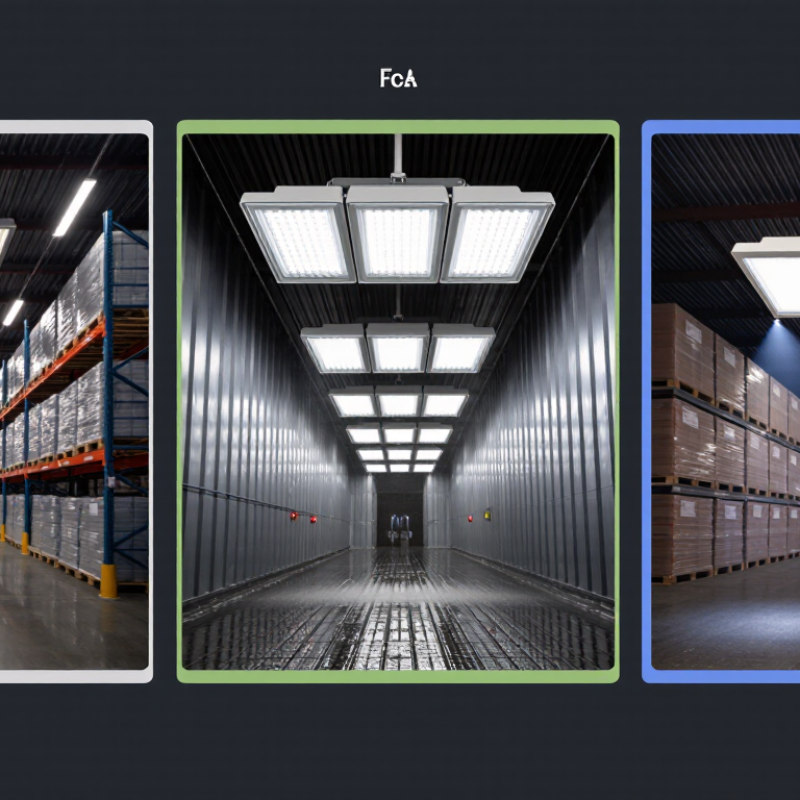
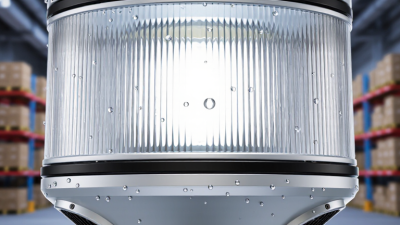
Tri-proof lights are sealed LED fixtures designed to resist dust, moisture, and physical impact. The term “tri-proof” commonly refers to protection against water, dust, and corrosion, although actual performance depends on the product’s testing and construction. A typical fixture uses a sealed housing, a reinforced diffuser, and protected electrical connections. Some models carry IP65 or IP66 ratings, but buyers should verify the complete certification rather than trust the label alone.
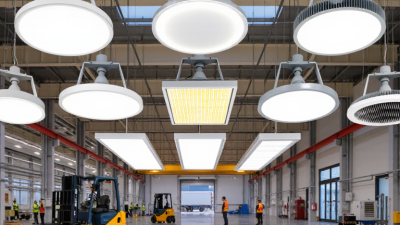
These lights are used in warehouses, parking areas, workshops, tunnels, and other demanding spaces. Their broad beam can brighten long aisles with fewer dark patches. LED technology also reduces energy use and replacement frequency compared with older fluorescent fittings. In a busy warehouse, this matters because changing lamps may require lifts, shutdowns, or extra labor. Stable light can also help workers read labels and notice floor hazards.
However, tri-proof lighting is not a universal solution. A high IP rating does not automatically protect against strong chemicals, extreme heat, or poor installation. I have seen suitable fixtures perform badly when water entered through loose cable glands. Buyers should check mounting height, color temperature, glare, ambient temperature, and emergency-lighting requirements. The cheapest option may look efficient on paper, yet its diffuser, driver, or seals can age sooner than expected. Careful site assessment remains more reliable than relying on the phrase “tri-proof” alone.
| Evaluation Dimension | Typical Specification or Market Range | Why It Matters to Global Buyers | Recommended Verification Point |
|---|---|---|---|
| Product Definition | Sealed linear LED luminaire designed to resist dust, water, moisture, and everyday impact | Suitable for demanding indoor and semi-outdoor environments | Review construction drawings, material declarations, and test reports |
| Ingress Protection | IP65, IP66, or IP67; IP65 and IP66 are common for industrial lighting | Protects internal electrical components from dust and water exposure | Confirm testing under IEC 60529 and check whether the rating applies to the complete fixture |
| Impact Protection | IK08 to IK10, depending on housing and lens construction | Reduces the risk of damage in warehouses, workshops, parking areas, and public facilities | Request impact-test documentation based on IEC 62262 |
| Luminous Efficacy | Approximately 100–160 lm/W for many current commercial LED models | Higher efficacy can reduce energy consumption while maintaining the required light level | Compare system efficacy, not only LED-chip efficacy, using LM-79 or equivalent test data |
| Typical Power Ratings | Common configurations include approximately 20 W, 30 W, 40 W, 50 W, 60 W, and 80 W | Allows replacement of conventional fluorescent fixtures and adaptation to different mounting heights | Check actual input power, delivered lumens, and photometric files |
| Color Temperature | Typically 3000 K, 4000 K, 5000 K, or 6500 K | Supports warm, neutral, or cool lighting preferences in different markets and applications | Confirm CCT tolerance, chromaticity consistency, and available inventory |
| Color Rendering | CRI ≥80 is common; CRI ≥90 is available for applications requiring better color recognition | Improves visibility of products, equipment, labels, and work areas | Request test results for Ra and, where relevant, R9 performance |
| Input Voltage | Regional versions commonly support 100–277 V AC or 220–240 V AC at 50/60 Hz | Ensures compatibility with electrical systems in different countries | Verify the rated voltage range, frequency, power factor, and surge protection |
| Operating Temperature | Many products are specified around −20°C to +45°C or −20°C to +50°C | Important for cold storage, hot production areas, and outdoor covered locations | Check the complete fixture’s ambient-temperature rating, not only the driver rating |
| Rated Lifetime | Typically 50,000–100,000 hours based on an L70 or equivalent lifetime specification | Long service life lowers relamping frequency and maintenance costs | Review LM-80, TM-21, in-situ temperature, and driver-life information where available |
| Housing and Lens Materials | Aluminum or polycarbonate housing; polycarbonate or acrylic diffuser | Material selection affects heat dissipation, impact resistance, weight, and chemical durability | Confirm UV resistance, flammability rating, chemical compatibility, and diffuser transmittance |
| Electrical Performance | Power factor commonly ≥0.90; low-flicker and surge-protected options are widely available | Supports stable operation, better grid performance, and improved visual comfort | Ask for power-factor, total-harmonic-distortion, flicker, and surge-test results |
| Installation Options | Surface-mounted, suspended, chain-mounted, or retrofit installation | Flexible mounting reduces installation time and simplifies replacement projects | Check included accessories, mounting spacing, cable entries, and wiring instructions |
| Controls and Emergency Options | Optional dimming, occupancy sensing, daylight control, emergency battery, and smart-lighting interfaces | Enables energy management and compliance with project-specific safety requirements | Verify protocol compatibility, emergency duration, battery replacement, and commissioning requirements |
| Common Applications | Warehouses, factories, workshops, parking areas, tunnels, car washes, agricultural buildings, and utility rooms | Sealed construction performs well where dust, humidity, cleaning, or accidental impact are concerns | Match the fixture’s IP, IK, temperature, chemical, and photometric ratings to the site conditions |
| International Compliance | Depending on destination: CE, RoHS, UKCA, UL or ETL-related requirements, EMC, and photobiological safety documentation | Reduces customs, approval, liability, and project-acceptance risks | Request destination-specific certificates, declarations, reports, and product labels before ordering |
Note: Specifications shown are representative market ranges for tri-proof LED luminaires. Actual performance varies by product design, installation conditions, testing method, and regional requirements.