| Definition |
A decorative ceiling-mounted light fixture, usually designed with multiple light sources or a prominent sculptural form. |
It combines general illumination with a strong architectural focal point. |
The ceiling and electrical box must be suitable for the fixture’s weight and installation method. |
| Visual Impact |
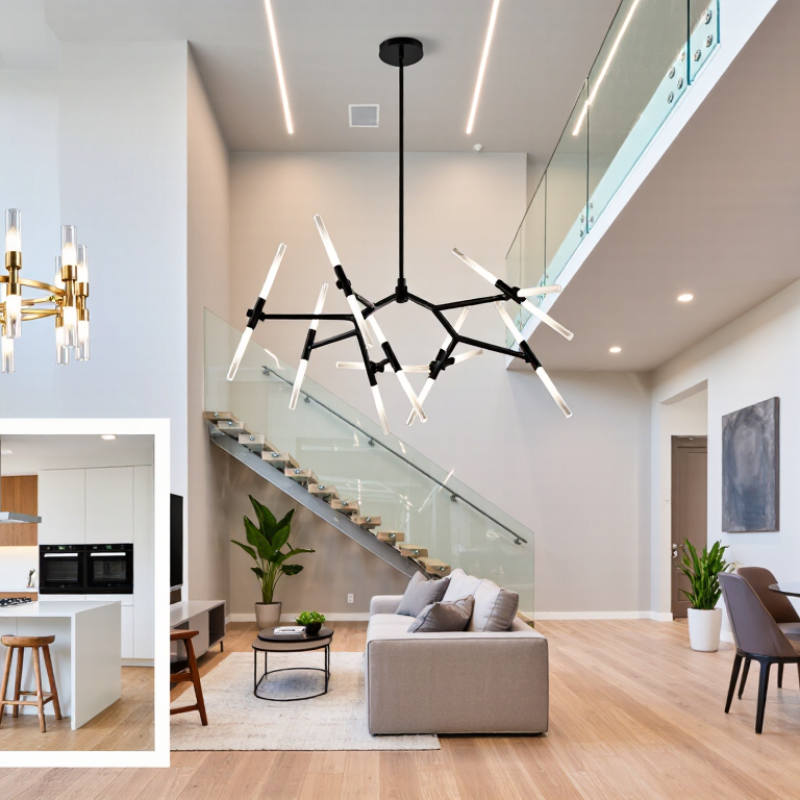
Creates a central decorative feature above a dining table, seating area, entryway, or bedroom. |
Minimal interiors often benefit from one carefully selected statement element. |
The fixture should be proportionate to the room and furniture below it. |
| Lighting Function |
Can provide ambient light, task support, or accent effects depending on its design and light distribution. |
Layered lighting supports flexible use of modern residential and commercial spaces. |
A chandelier may not provide sufficient task lighting by itself in work areas or kitchens. |
| Space Suitability |
Commonly used in living rooms, dining rooms, foyers, bedrooms, hospitality spaces, and reception areas. |
Different silhouettes and mounting heights can complement both compact and open-plan layouts. |
Low ceilings generally require a flush-mount or semi-flush design rather than a long-hanging fixture. |
| Typical Mounting Options |
Flush mount, semi-flush mount, rod-mounted, or cord- and chain-suspended configurations. |
Mounting flexibility makes it easier to coordinate the fixture with ceiling height and room scale. |
Suspended fixtures need clearance from doors, walking paths, and frequently used furniture. |
| Light Source |
May use replaceable LED lamps or integrated LED modules, depending on the fixture design. |
LED technology can support lower energy use, long service life, and compact fixture profiles. |
For replaceable lamps, check the required base type, wattage limit, and dimmer compatibility. |
| Color Temperature |
Common choices range from warm white around 2700–3000 K to neutral white around 3500–4000 K. |
Warm light creates a relaxed atmosphere, while neutral light offers a cleaner, more energetic appearance. |
The selected color temperature should coordinate with the room’s finishes and other light sources. |
| Control Options |
May be controlled by a wall switch, dimmer, smart lighting system, or compatible remote control. |
Adjustable brightness helps a single fixture serve decorative, social, and functional needs. |
The fixture, lamp, and dimmer must be electrically compatible. |
| Design Compatibility |
Available in geometric, linear, ring, globe, cluster, tiered, and sculptural forms. |
Clean geometry and restrained finishes can complement contemporary, industrial, minimalist, and transitional interiors. |
Select a shape that repeats or balances existing lines, materials, and architectural features. |
| Maintenance |
Requires periodic dusting and, for multi-element designs, careful cleaning of shades, arms, or decorative parts. |
A well-maintained fixture preserves light output and visual quality. |
Turn off power before cleaning and follow the fixture manufacturer’s care instructions. |
| Selection Checklist |
Review room dimensions, ceiling height, fixture diameter, hanging height, light output, control method, and electrical requirements. |
A balanced selection improves both the room’s appearance and everyday usability. |
For heavy or complex fixtures, professional installation is recommended. |