

Leave Your Message
-
 Email
Email -
 Whatsapp
-
 WeChat
Choosing the right Changecolor Lights can feel simple in a showroom. It becomes harder when products cross borders, climates, and electrical systems. A lamp may look vivid in a short video, yet perform poorly in a humid hotel, outdoor venue, or retail display. Buyers must examine color consistency, control compatibility, heat management, warranty terms, and local safety requirements.
James Turrell, a widely respected light artist and designer, once said, “Light is not so much something that reveals, as it is itself the revelation.” His observation matters here. Changecolor Lights do more than change appearance. They shape attention, atmosphere, customer experience, and even perceived material quality. The best choices should therefore balance visual impact with dependable engineering.
This guide reviews seven Changecolor Lights suitable for global buyers. Each option is considered through practical details, including RGB or RGBW performance, brightness stability, dimming behavior, installation flexibility, and international voltage support. Certification requirements may differ between markets. Buyers should verify them before ordering.
No ranking is perfect. A compact fixture may win in a gallery but disappoint on a large facade. A low-cost model may seem attractive until replacement parts become difficult to source. Testing remains important. Request samples, inspect connectors, and run the light for several hours before making a large purchase. Small details matter, especially when one shipment includes hundreds of units.
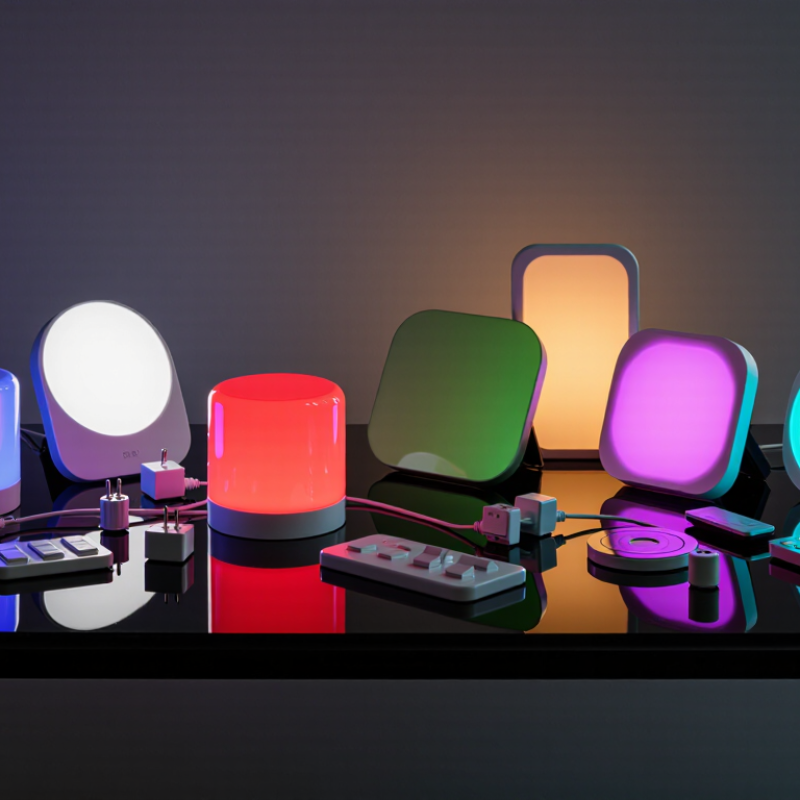
Color-changing lights create different moods by adjusting hue, brightness, or white temperature. Their performance depends on the technology inside, not only the lamp’s appearance. RGB systems mix red, green, and blue diodes to produce vivid colors. They suit decorative lighting, events, and accent walls. RGBW adds a dedicated white diode, giving cleaner whites and better everyday illumination. This difference matters in kitchens, hotels, and workspaces.
Tunable-white lights shift between warm and cool white, often from candle-like tones to daylight shades. They do not create saturated colors, but they usually provide more natural lighting. Addressable systems control individual sections or pixels, allowing flowing patterns and detailed animations. They require compatible controllers and careful wiring. In practical testing, heat buildup often reduces color consistency. That detail is easy to overlook. No system is perfect.
Tips: Check the input voltage, connector type, control protocol, and IP rating before ordering. For humid areas, choose suitable moisture protection and seal exposed connections. Compare brightness using lumens, not marketing adjectives. Ask for color-rendering data when accurate white light matters. Test a sample for flicker, remote response, and installation fit. Some color effects look impressive online but feel harsh in a real room. Allow space for ventilation, and confirm replacement parts will remain available in your market.
| Lighting Type | Main Color Technology | Typical Color Output | Common Control Methods | Typical Input Options | Typical Protection Rating | Best Applications | Main Advantages | Important Buying Considerations |
|---|---|---|---|---|---|---|---|---|
| RGB LED Bulb | Three-color LED mixing using red, green, and blue diodes | Millions of mixed colors Decorative white | Infrared remote, radio-frequency remote, Wi-Fi, Bluetooth, or smart-home platform | Usually 100–240 V AC; some versions use low-voltage DC with a separate driver | Normally IP20 for indoor use | Bedrooms, living rooms, hospitality spaces, displays, and decorative accent lighting | Easy installation, broad color range, and wide availability of standard socket formats | RGB-only models may produce less natural white light; check socket type, wireless protocol, and regional voltage compatibility |
| RGBW LED Bulb | RGB color mixing combined with a dedicated white LED channel | Full-color effects Warm or cool white | Remote control, Bluetooth, Wi-Fi, or wired control systems | Commonly 100–240 V AC; low-voltage versions are also available | Usually IP20 indoors; outdoor models require a specified sealed enclosure | Homes, restaurants, retail areas, hotels, and event spaces requiring both color effects and useful white light | Better white-light quality and greater flexibility than RGB-only designs | Confirm whether the white channel is fixed, tunable, or both; verify lumen output in white mode rather than color mode |
| Tunable White and RGBW Panel | Independent white LED channels, often combined with RGB or RGBW channels | Approximately 2,700–6,500 K Color effects on selected models | DALI, DMX, 0–10 V, wireless gateway, wall controller, or app | Usually low-voltage LED modules powered by an external driver; driver input may support 100–240 V AC | Typically IP20; IP-rated versions are designed for humid or dusty areas | Offices, classrooms, retail interiors, studios, hospitality ceilings, and commercial projects | Good uniformity, adjustable white light, and compatibility with professional lighting controls | Requires careful driver and control-system matching; installation is less plug-and-play than a bulb |
| Addressable LED Strip | Individually controlled LED pixels using integrated digital driver chips | Animated gradients Chasing effects Pixel-level color control | Digital controller, microcontroller, DMX interface, or network lighting system | Commonly 5 V, 12 V, or 24 V DC; a correctly sized power supply is required | IP20, IP65, IP67, or IP68 depending on coating and construction | Signage, architectural details, entertainment areas, displays, stages, and creative installations | Highly programmable effects and flexible cut-to-length installation | Voltage drop, power injection, heat management, waterproof connectors, and controller compatibility are critical |
| Neon-Flex LED Light | LEDs enclosed in a continuous silicone or polymer diffuser | Single color RGB RGBW Pixel-controlled options | Inline controller, remote, DMX, SPI, Bluetooth, or Wi-Fi depending on configuration | Typically 12 V or 24 V DC; some commercial systems use dedicated drivers | Often IP65–IP68 when properly terminated; rating varies by bending direction and model | Outdoor signage, façades, hospitality features, cove lighting, and curved decorative structures | Continuous dot-free appearance, impact protection, and strong visual performance | Check bending direction, minimum bend radius, UV resistance, connector sealing, and heat dissipation |
| Smart Color-Changing Downlight | Integrated RGB or RGBW LED engine with electronic dimming and color control | Full-color effects Adjustable white on selected models | Wall switch, remote, Bluetooth, Wi-Fi, Zigbee, or other smart-home protocols | Usually 100–240 V AC integrated driver or a separate low-voltage driver | Commonly IP20; bathroom and exterior versions may be IP44 or higher | Residential ceilings, hotels, restaurants, galleries, and smart-building interiors | Clean recessed appearance, centralized automation, and programmable scenes | Check cut-out diameter, ceiling depth, driver access, wireless standards, and whether the light can operate without cloud service |
| Outdoor RGBW Floodlight | High-power RGBW LED array with optical lens and sealed housing | Wide-area color washes White illumination | DMX512, wired controller, wireless bridge, timer, or standalone remote | Commonly 100–240 V AC with an integrated driver; some systems use 12–48 V DC | Typically IP65–IP66; IP67 models provide additional temporary-immersion protection | Building façades, gardens, monuments, event venues, parks, and landscape features | High optical output, long throw distance, and suitability for large outdoor areas | Confirm beam angle, corrosion resistance, surge protection, cable glands, thermal design, and local electrical requirements |