

Leave Your Message
-
 Email
Email -
 Whatsapp
-
 WeChat
Choosing among China’s top ten LED light fixture manufacturers requires more than comparing factory size or product catalogs. A reliable Led Light Fixture supplier should prove performance through test reports, documented projects, stable production, and responsive technical support. Product photographs alone are not enough.
James R. Brodrick, a U.S. Department of Energy solid-state lighting specialist, has emphasized, “LED technology is more than a light source; it is a system.” That view remains practical today. A fixture combines chips, drivers, optics, thermal materials, housing, controls, and installation design. Weakness in one part can shorten service life, increase glare, or reduce energy savings.
This guide examines ten influential Chinese manufacturers through practical criteria. These include product consistency, optical performance, thermal management, certifications, warranty terms, customization ability, and international project experience. It also considers whether a supplier communicates clearly after delivery. That matters more than impressive factory videos.
Key details deserve attention. Check LM-80 and TM-21 evidence where applicable. Review IP and IK ratings for outdoor applications. Confirm driver brands, surge protection, color tolerance, and photometric files. Ask for samples before approving large orders.
No ranking is perfect. Market positions change. Some manufacturers excel in roadway lighting but perform less strongly in architectural applications. Others offer excellent customization but slower delivery. The best choice depends on project location, budget, maintenance plans, and lighting objectives. A careful buyer should question every claim, including those made in this article.
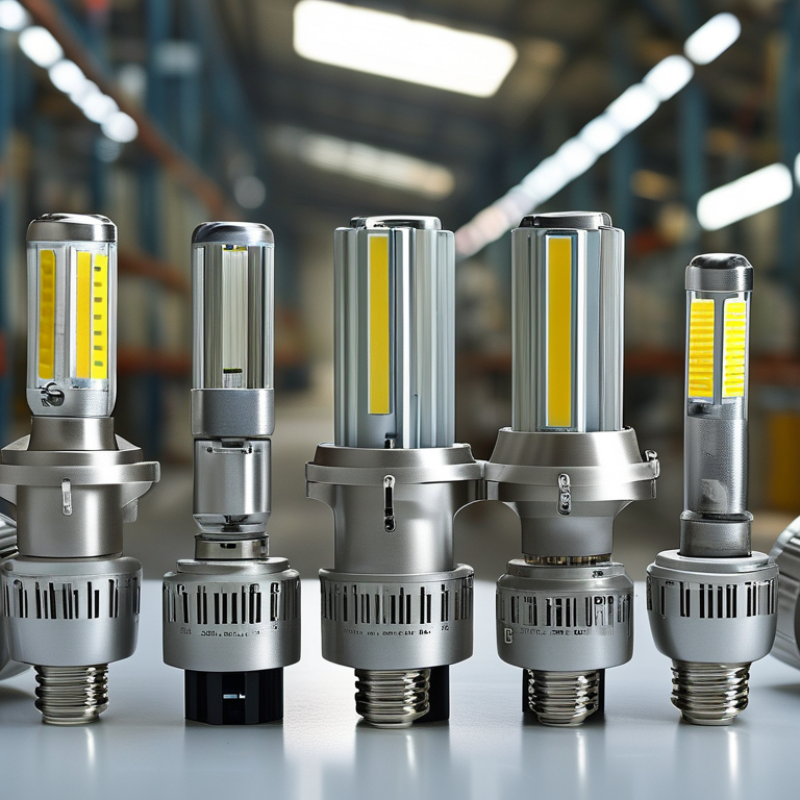
A leading LED light fixture manufacturer in China is defined by measurable performance, not factory size or export volume. The IEA’s 2024 Energy Efficiency report estimates that lighting still consumes about 5% of global electricity. This makes efficiency claims important, but not sufficient. A reliable manufacturer should provide tested lumen output, power consumption, color consistency, glare data, and lifetime estimates. Independent photometric reports and recognized testing procedures add credibility.
Thermal design is another practical dividing line. Engineers should inspect heat sinks, driver quality, surge protection, and performance at high ambient temperatures. LM-80 and TM-21 data can support LED lifetime claims, while ISO 9001 systems show process control. The U.S. Department of Energy reports that LED products can use at least 75% less energy and last up to 25 times longer than incandescent lighting. However, poor drivers may shorten real-world service life. No factory is perfect.
Tips: Request a sample, test it for several weeks, and compare measured output with the datasheet. Check warranty terms, spare-part availability, factory inspection records, and batch consistency. A strong supplier should explain failures openly, not hide behind impressive brochures. Customization matters too, but excessive options can weaken quality control. The best manufacturer balances optical expertise, stable production, documented testing, and responsive technical support.
Supplier-neutral benchmarking table based on recognized lighting standards, product-performance evidence, manufacturing controls, and project-delivery capability.
| Rank | Evaluation Dimension | Credible Industry Benchmark | Evidence to Request from a Manufacturer | Why It Defines a Leading Supplier |
|---|---|---|---|---|
| 1 | Product Safety and Compliance | Compliance with applicable requirements such as IEC 60598-1, EN 60598-1, UL 1598, or other destination-market safety standards. | Test Reports Declarations of Conformity Factory Quality Records | Demonstrates that the luminaire has been evaluated for electrical, thermal, mechanical, and fire-safety risks. |
| 2 | Photometric Performance | Performance should be reported using complete-luminaire data, including delivered lumens, luminous efficacy, beam angle, color temperature, color rendering, and photometric files. | IES Files LDT Files Integrating-Sphere Reports | Complete-luminaire data is more reliable than LED-chip or laboratory-module figures when designing real lighting projects. |
| 3 | LED Lifetime and Lumen Maintenance | Lifetime claims should be supported by LM-80 data for LED packages, arrays, or modules and TM-21 calculations where applicable. | LM-80 Reports TM-21 Projections Lumen-Maintenance Data | Separates engineering-based lifetime claims from unsupported statements such as a generic “50,000-hour life.” |
| 4 | Thermal Management | The design should control LED junction temperature through appropriate heat sinks, thermal interfaces, driver placement, and enclosure ventilation. | Thermal Test Results Temperature Measurements Installation Limits | Effective thermal design supports stable light output, longer component life, and dependable operation in demanding environments. |
| 5 | Ingress and Environmental Protection | Outdoor and industrial fixtures should use an appropriate IP rating under IEC 60529, such as IP65 or IP66 when the application requires protection against dust and water jets. | IP Test Reports IK Test Data Corrosion-Test Results | Confirms whether the fixture is suited to moisture, dust, impact, salt-air, chemical, or other site conditions. |
| 6 | Driver Quality and Electrical Reliability | The driver should be matched to the fixture’s input voltage, power factor, total harmonic distortion, dimming method, surge environment, and operating temperature. | Driver Datasheets Power Quality Tests Surge Tests | Driver performance strongly affects flicker, system efficiency, failure rates, maintenance costs, and compatibility with control systems. |
| 7 | Lighting Controls and Interoperability | Products should support application-appropriate control options, including 0–10 V, DALI-2, occupancy sensing, daylight harvesting, or compatible networked controls. | Control Protocol Data Compatibility Lists Commissioning Guides | Interoperability reduces integration risk and enables energy-saving functions in commercial, industrial, and smart-building projects. |
| 8 | Quality Management and Production Control | A mature manufacturer should operate documented incoming-material inspection, process control, aging tests, final inspection, traceability, and corrective-action procedures. | ISO 9001 Certificate Inspection Plans Batch Traceability | Consistent production controls help ensure that delivered batches match approved samples and declared specifications. |
| 9 | Customization and Engineering Support | Capability should include optical distribution, housing dimensions, mounting methods, color temperature, emergency options, dimming, labeling, and project-specific packaging. | Technical Drawings Sample-Approval Process Application Support | Strong engineering support allows the fixture to meet site requirements instead of forcing a project to use a standard product that may not be suitable. |
| 10 | Warranty, Documentation, and Supply Capability | A professional supplier should provide clear warranty terms, installation instructions, spare-parts support, change-control procedures, and realistic production lead times. | Warranty Policy User Manuals Capacity and Lead-Time Records | Transparent after-sales support and dependable delivery reduce lifecycle risk for distributors, contractors, and end users. |